
Font Size:
Tree Trimming

AEC Tree Trimming Policies & Rights-of-Way Procedures
Benefits of Rights-of-way management by Appalachian Electric Cooperative (AEC):

AEC Tree Trimming Policies & Rights-of-Way Procedures
Benefits of Rights-of-way management by Appalachian Electric Cooperative (AEC):
Five Core Standards
Quality Tree Care
Industry standards for pruning, planting, removals, trenching, and tunneling near trees are consistently followed.
Annual Worker Training
Utility employees and contract workers are trained at least annually in best practices.
Tree Planting & Public Education
Tree planting and public education programs are available to the public and paying customers, demonstrating proper tree planting, placement, and pruning while expanding the tree canopy in the community.
Tree-Based Energy Conservation Program
A formal tree-based energy conservation program is in place, putting special consideration on the value of trees in conserving energy.
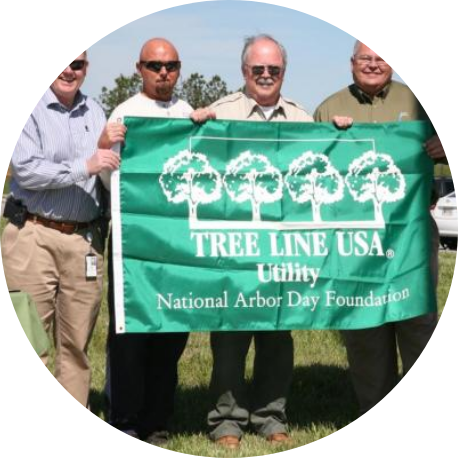
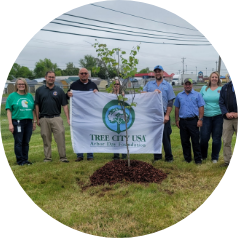
Arbor Day Celebration
Sponsorship of or participation in annual Arbor Day events at the community level are documented, including collaboration with community groups whenever possible.
Tree Planting Tips

Six Things You Should Know When Planting a Tree
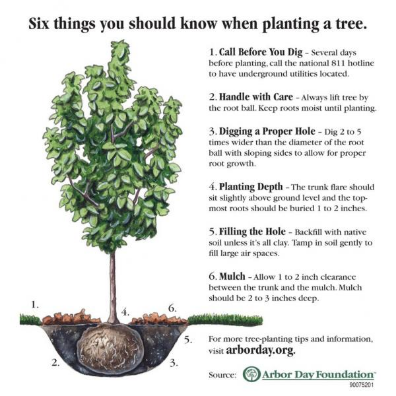
Call Before You Dig
Several days before planting, call the national 811 hotline to have underground utilities located.
Handle with Care
Always lift tree by the root ball. Keep roots moist until planting.
Digging a Proper Hole
Dig 2 to 5 times wider than the diameter of the root ball with sloping sides to allow for proper root growth.
Planting Depth
The trunk flare should sit slightly above ground level and the top-most roots should be buried 1 to 2 inches.
Filling the Hole
Backfill with native soil unless it’s all clay. Tamp in soil gently to fill large air spaces.
Mulch
Allow 1 to 2 inch clearance between the trunk and the mulch. Mulch should be 2 to 3 inches deep.
Proper Distancing from Utility Lines
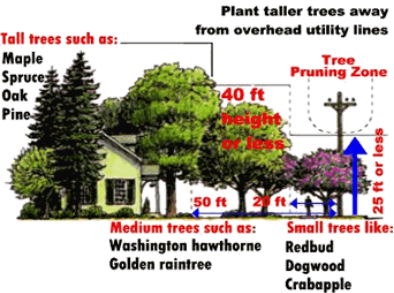
Plant taller trees away from overhead utility lines
Small trees can be next to the pole if they are 25 feet or less. Trees like
Redbud
Dogwood
Crabapple
Redbud
Dogwood
Crabapple
Plant taller trees away from overhead utility lines
Medium trees with a height of 40 feet or less should 20 feet away from a utility pole. Trees like
Washington Hawthorne
Golden Raintree
Washington Hawthorne
Golden Raintree
Old Method – Tree Topping
- National Arbor Day Foundation
- International Society of Arboriculture
- National Arborist Association
- Weakened trees are more likely to break during wind, ice, and snow storms.
Current Method – Lateral Trimming
- Lateral trimming is utilized by AEC