

Who We Are

History

1940

In 1940, Appalachian Electric Cooperative (AEC) borrowed money from the U.S. Department of Agriculture through the Rural Electrification Administration (REA).

  • They used these funds to acquire existing electric facilities, marking AEC’s beginnings
  • The original loans were repaid to the REA over 35 years at low interest rates
TVA

The Tennessee Valley Authority (TVA) supplies electric energy to the Cooperative at wholesale rates.
  • Roughly 80 cents of every dollar collected by the Cooperative goes to the TVA for power
  • Appalachian Electric Cooperative operates under a wholesale power contract with TVA, which specifies power rates for its members
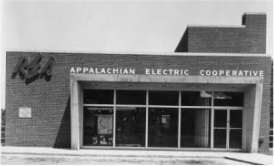
Historic photo of the AEC building
Historic photo of the AEC building.

Our Mission

To transform our communities and empower our members by providing safe, cost-effective, and reliable essential services.

Our Core Statements


AEC is owned by those we serve


We lead the way with dependable power, member care and exceptional value


We enhance our communities through innovative energy solutions and game-changing fiber services


AEC is here to make your life better

  • Open membership to all individuals who can use cooperative services and accept membership responsibilities
  • No discrimination based on race, religion, gender, or economic circumstances
  • Cooperatives are democratic organizations
  • Members actively participate in policy-setting and decision-making
  • Representatives, such as directors or trustees, are elected from the membership and are accountable to them
  • Primary cooperatives follow the principle of equal voting rights (one member, one vote)
  • Cooperatives at higher levels are also organized in a democratic fashion
  • Members contribute equitably to, and democratically control, the capital of their cooperative
  • At least part of that capital remains the common property of the cooperative
  • Representatives, such as directors or trustees, are elected from the membership and are accountable to them
  • Members allocate surpluses for any or all of the following purposes: developing the cooperative; setting up reserves; benefiting members in proportion to their transactions with the cooperative; and supporting other activities approved by the membership
  • Cooperatives are autonomous and self-help organizations
  • They are controlled by their members
  • When entering agreements with other organizations, including governments, or raising external capital, they ensure terms that maintain democratic control and preserve their distinct identity
  • Education and training are provided for members, elected representatives (directors/trustees), CEOs, and employees
    This training helps them contribute effectively to cooperative development
  • Communication efforts aim to promote understanding of cooperatives among the general public and opinion leaders
  • These activities emphasize the nature and benefits of cooperatives, fostering awareness and support
  • Cooperatives collaborate through local, national, regional, and international structures
  • This cooperation enhances services, strengthens local economies, and addresses social and community needs more effectively
  • Cooperatives actively pursue sustainable community development
  • They implement policies that are supported by their membership to achieve this goal

Facts About Your Cooperative

0

Total Membership

0

Residential Members

0

Commercial Members

0

Street, Athletic, & Traffic Lights

0

Miles of distribution line

0

Miles of transmission line

0

Total utility plant investment

0

Members per mile of line

0

Full time employees

Service Area

Legend
  • District 1
  • District 2
  • District 3
  • District 4
  • District 5
  • District 6
  • District 7
  • District 8
  • District 9
What’s my district?